
Six years, 1,200 trees: a Southland club completes its planting project at Ōreti

On a cold Sunday in June, a small group of Southland trampers put the final plants of a six-year project into the ground — and stood back to look at a forest that is, quite literally, growing up around them.
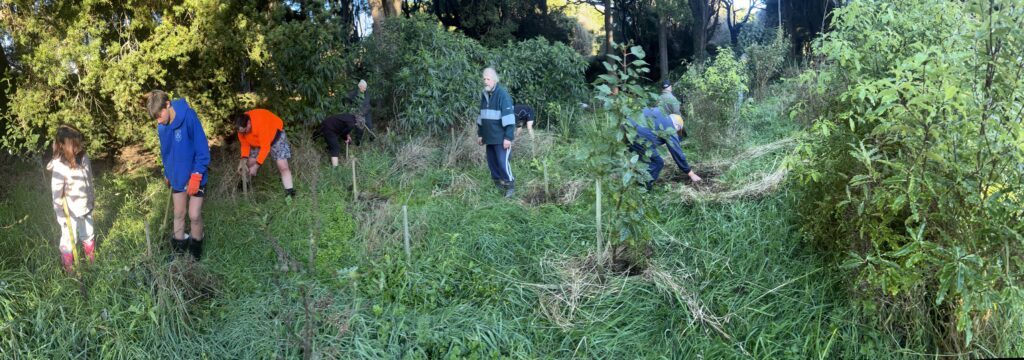
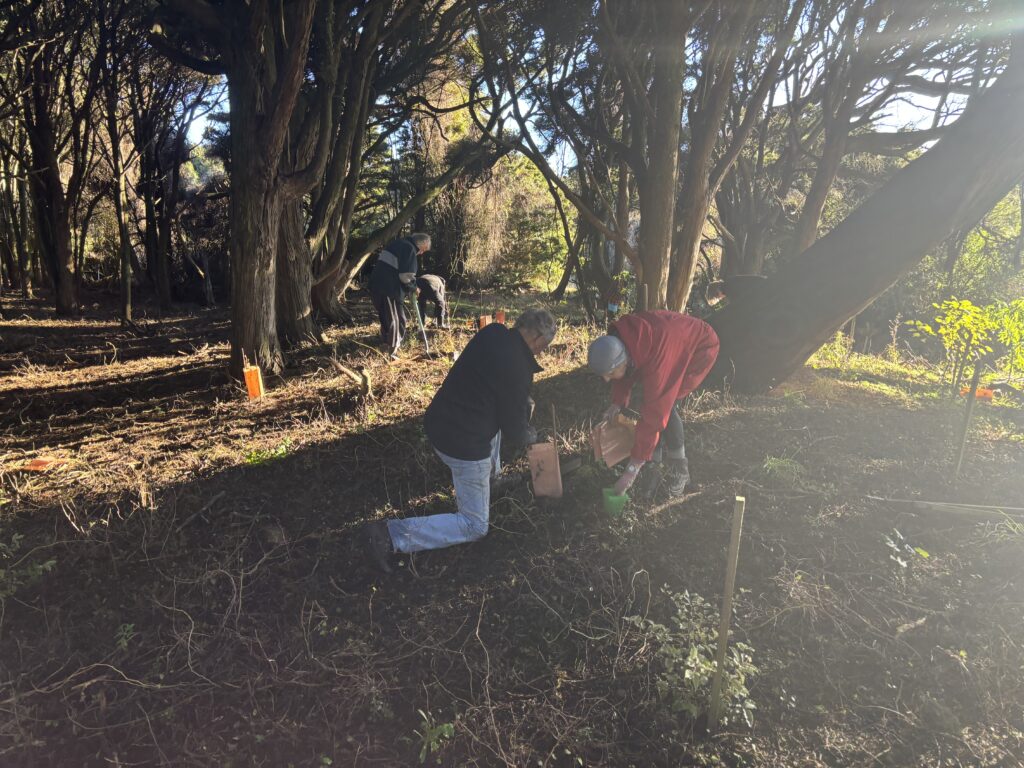
On 21 June 2026, the Southland Tramping and Outdoor Recreation Club (STORC) completed a planting project at Ōreti Tōtara Dune Forest that they began back in 2021. Over those six years, the club has funded and planted 1,200 trees — plus another hundred or so donated on top — with around ten to twelve volunteers turning out each year, in every kind of Southland weather.
The rhythm of it tells the story: 100 trees in 2021, another 100 in each of 2022 and 2023, then a milestone year in 2024 — 700 trees to mark the club’s 75th anniversary — and 100 more in each of 2025 and 2026. Six years of working bees, one patient season at a time.
A forest worth the effort
Ōreti is one of the rarest kinds of forest left in the country. On a series of old sand dunes on the east bank of the Ōreti River, just west of Invercargill, grows a tōtara forest of a type classified as nationally endangered — a naturally rare ecosystem that has been almost entirely lost elsewhere. The patches around Otatara are considered the best example of this sand-dune tōtara sequence anywhere in New Zealand, and this property was one of the largest remaining unprotected sites of its kind — not just in the district, but in the whole country.
It came close to being lost. Depleted by logging and then years of grazing, the land finally found protection in 2020, when hundreds of Trust supporters answered a public appeal — during one of the Trust’s most challenging fundraising years — and helped buy it. That is why STORC’s trees have somewhere permanent to grow. You protected the place; they’ve been restoring it, one tree at a time.
Now taller than the people who planted them
The best part is what’s already happening. The first plantings from 2021 have mostly established well, with some of the wineberry now standing more than three metres tall — above head height, taller than the volunteers who planted them. The more recent plantings are still a little shorter, but they’re coming away too, and will soon rise above the grass and lupin, tall enough to compete with the surrounding vegetation. A cathedral of matai and tōtara, sculpted by the coastal wind, will one day close over ground that a group of trampers cleared and planted by hand.
Between the tōtara fingers, pīwakawaka may join you on the walk, while tūī and korimako call from the canopy. This is the living forest those 1,200 trees are helping to restore.
Thank you, STORC
A project like this doesn’t happen without someone to start it and keep it going. Our thanks go to Barry Smith, who first had the idea and organised the working-bee days year after year, and to every one of the STORC members and friends who gave up their Sundays to plant. It’s a remarkable thing to add to a club’s long list of conservation work, and they should all be immensely proud.
And the story isn’t quite over. While this particular project is complete, STORC are already talking about doing more in the area — likely alongside the Southland Community Nursery — and they’ve promised to keep us posted. We can’t wait to see it.
To all of you who helped protect Ōreti in the first place, and to the volunteers who have tended it ever since: thank you. This is what it looks like when a rare forest is given back its future.
If you’d like to help protect and restore places like Ōreti, for ever, you can donate today.